


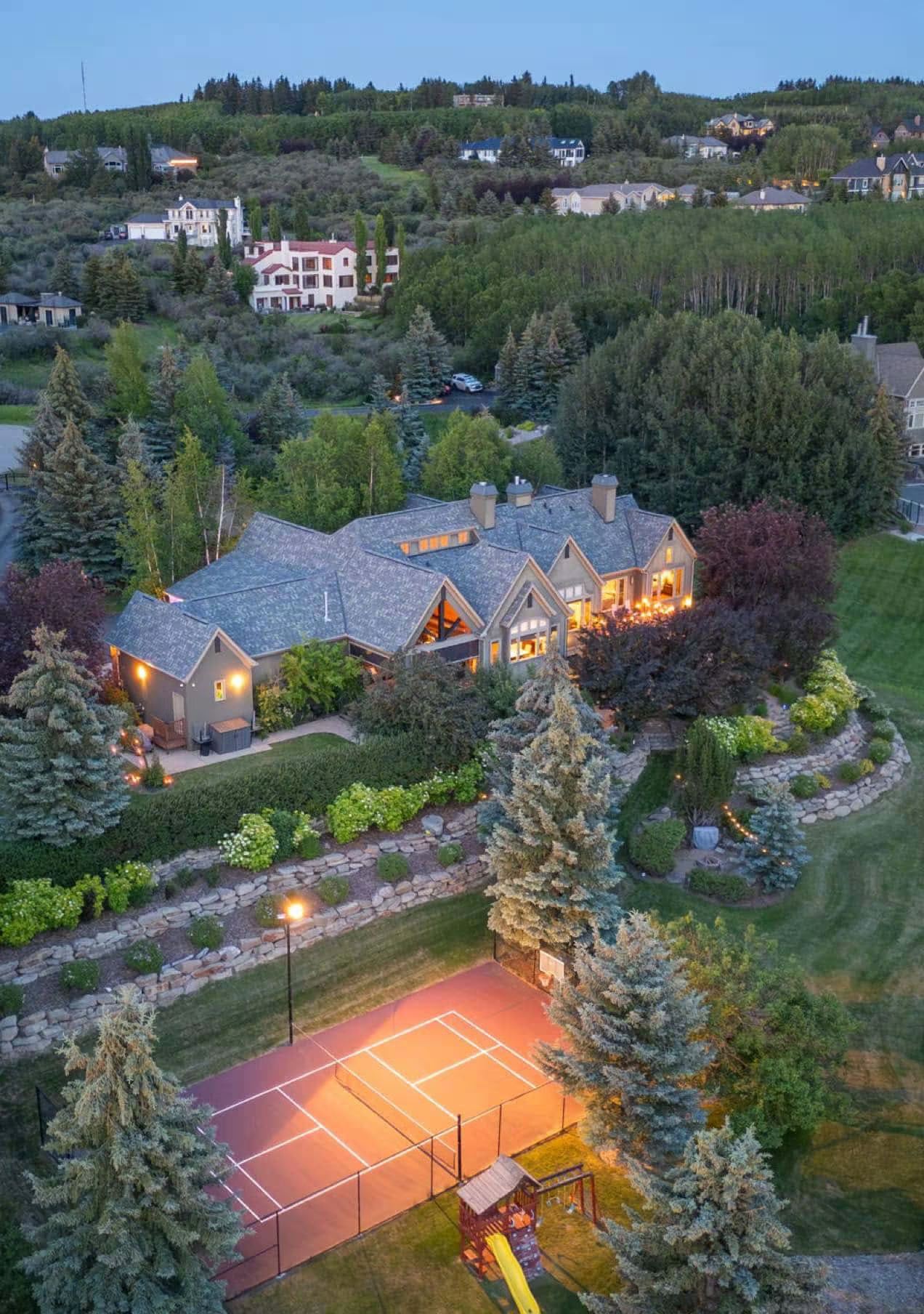







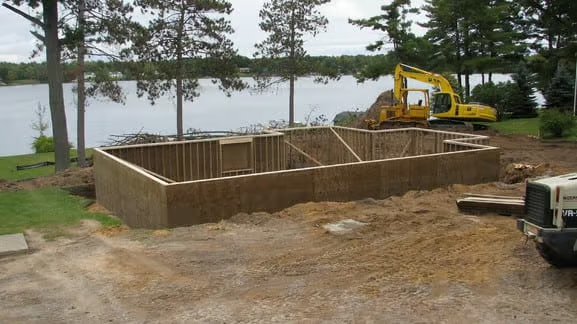
Chances are if you are reading this, you are interested in or own a property that has a wood basement. Wood basements, also commonly referred to as a PWF standing for Permanent Wood Foundation or Preserved Wood Foundation, are a common building practice. A wood basement can have many advantages to a conventional concrete basement. In this post, we will compare wood foundations vs concrete foundations.
Wood Foundations vs. Concrete Foundations
What is the purpose of a basement?
Before we start talking about a wood foundation compared to concrete, let’s discuss the purpose of a basement. Ultimately the need for having a residential basement is dictated by the climate of where the home is built. The primary function for a basement to provide a solid foundation for the structure of the house that is being built. In climates susceptible to frost, the foundation wall will sit on a footing, (generally concrete) below the frost line. When moisture freezes, it expands. When it thaws, it compresses. This cycle is referred to as frost heave. If this footing, or foundation is built above the frost line then the structure will be constantly moving as seasons change. Moving structure leads to all sorts of issues: cracking, ongoing settling, and weakening of fragile mechanical systems including plumbing and electrical. Hence the introduction of a basement.
A secondary function of the basement is to allow for a convenient way to bring utilities into the home while protecting them from the elements. With the water line generally coming into the basement below the frost line and the sewer discharge also exiting below frost, this should keep the in’s & out’s running smoothly.
Outside of the mechanical and structural functions of a basement come the benefits of having additional storage and living space. Some of the greatest living spaces can be created below grade.
What are the different types of foundations?
When it comes to construction techniques, there are lots of options beyond just concrete and wood. For example, we are now seeing options like Insulated Concrete Form (ICF), Precast panels, Steel Stud, or more traditional methods like concrete block, concrete, wood and more. There are many misconceptions about basement types. Many people consider concrete the best option for a basement, but I would argue that a PWF can be just as good, if not better in some applications.
Every basement needs to be protected. Plain and simple, you could have the fanciest most expensive basement built, but if it isn’t property protected with a waterproofing membrane, appropriate drainage around footing, and grading away from the foundation wall then problems will surely arise. Assuming you have these elements in place, then the wood basement has many advantages over concrete. Here are 5 points that may give a wood foundation the edge over concrete:
Quicker to build:
With a poured concrete wall there are many additional steps. After your footing is poured, contractors will form the walls, place the re-bar, pour the concrete, strip the forms, and then you have to wait for the concrete to cure properly so it is strong enough before you can waterproof it, backfill and start building.
Easier to modify:
How many times have you wished for that additional window in the basement? Not an easy nor inexpensive task with concrete. It requires specialized equipment and manpower to cut doorways or windows in place. If engineering is required to ensure your modifications are structurally sound it is much more challenging with concrete. With wood the materials are readily available and it is generally some simple framing modifications.
Warmer:
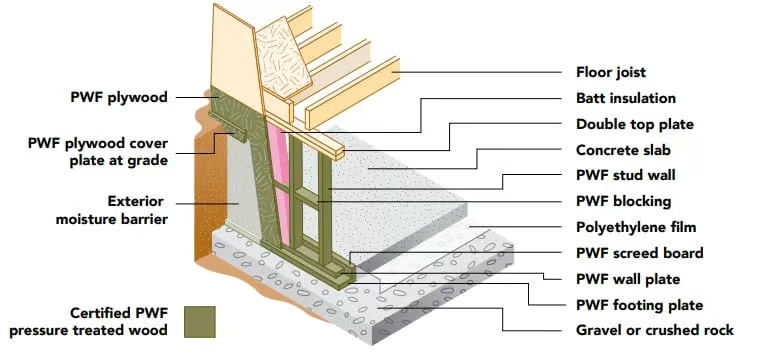
Usually a concrete foundation wall will require a 2×4 interior frost wall to allow for insulation, where a PWF wall is generally 2×8 or 2×6 and doesn’t require that interior frost wall. That cavity allows plenty of space for insulation, plus a void to run some rough-ins in the walls.
More interior space:
Instead of having to build a second wall inside the foundation wall to run electrical, plumbing, and fasten drywall, you can complete this directly on the foundation wall giving the same footprint another 8” or more of space wall to wall.
Drier:
Unlike concrete, treated wood doesn’t absorb moisture, rather it wicks away. Concrete contains moisture in it’s makeup and easily absorbs moisture from it’s surroundings. In heavy rains and harsh conditions, wood is quicker to dry than concrete.
I have seen many homes over 100 years old with wooden basements and concrete basements. Concrete tends to flake and break away easily which is difficult and costly to repair. With wood, it is much easier to repair (if necessary) and reinforce.
So what are the downsides to a Permanent Wood Foundation?
It is prudent to consider what the negatives to a PWF might be. Frankly, (and unfortunately) in my expert opinion it is one simple factor: Resale. Because the masses haven’t yet read this blog post, (or any of the many others that discuss the benefits of a PWF) it is a less common building practice that sometimes creates hesitation for Buyers. Fortunately, in recent years (2021 till current) there has been significant organic mythbusting over the PWF. Our team have sold dozens of Million Dollar Plus homes with permanent wood foundations (feel free to ask for a list and we’d be happy to show you some). The hesitation is becoming less and less, and buyers are now starting to ask the question: “What type of foundation does this proprty have?” Whether the answer is a PWF, ICF, Conventional Concrete, Cinder Block…and the list goes on… the savvy Buyer will understand and appreciate the pros & cons of each foundation type.
I am thinking of Buying a house with a wood basement, what due diligence should I complete?
This is a great question! We always advise our seller’s that have a Wood Basement to have a professional Engineer assess the basement and write a report to have available to prospective buyers. Yes, this report can be in the $1500-3000 type range, however, this is a critical investment. By having this report, the Seller will:
(a) Demonstrate that they care about their property and are informed in the product which they are selling. Everyone loves pride of ownership, and this is a perfect example.
(b) Shorten the length of time a Buyer requires to make their decision on the property. If the report is a glowing review with a confident engineers stamp and offered to every buyer who previews the property- buyers will be confident from the moment they set foot on the property. It eliminates virtually all doubt and hesitation on a PWF and it is unlikely they will hire their own engineer to get a report, which can sometimes take weeks.
To Summarize:
Don’t automatically assume that a property with wood basement is an inferior structure than that of a concrete foundation. When built and cared for properly, these structures can rival one built on a concrete foundation. There are many excellent construction practices and when it comes time to write the offer, make sure you hire the right inspector. It is always a good idea to consult with a structural engineer to get their professional opinion on the foundation of the home you are looking to buy. If you are in the Calgary area, we have just the recommendations that you might be looking for- feel free to drop us a line.
For additional info, here is a PDF from the Canadian Wood Council. The information is an excellent read if you own, or are considering owning a PWF. (or if you are another Realtor® looking to pass along some resources to your clients)
Stay warm and dry!
Sources for photos:

Get Our Newsletter
Sign-up to receive our latest listings, local real estate market insights, advice, and upcoming team events, right in your inbox.